Womens Lingerie Biography
Source:- Google.com.pkDame Vivienne Westwood has always been a mass of contradictions. She hates, with an unswerving passion, consumerism and excess. Yet she has built a fashion empire. Ask her what she would like to change in the world and she says, "I'd get rid of advertising. Consumption is the biggest propaganda. It's ruined the world." Yet she herself devises beautiful ad campaigns, with pictures by superstar German photographer Jürgen Teller.
Westwood has always been this way. Her clothes are not just pieces of cleverly draped and reconstructed fabric, they are statements. She wants women to feel powerful, not just want to be thin.
Fiercely independent and self-sufficient, she now leaves the designing of the main collection to her husband, Andreas Kronthaler, while she concentrates on her activism. "I'm proud to be called an activist," she says. "I have a lifetime of ideas about how to make the world a better place. I'm always worried. I wake up in the middle of the night. But it's good because I sort things out. It's been a build-up, having this public face and the opportunity to speak."
Earlier this year, she protested against fracking. Most recently, even though thoroughly English, she was adamant that Scotland should vote "Yes" to independence. Her message to the Scots was, "In England, there is hardly any democracy left. The government does what it wants. You, Scotland, can have the government you want." She has always been a rebel.
Westwood is credited with creating the '70s punk revolution with her then-lover and business partner Malcolm McLaren. He invented the hype and put together the bands, the Sex Pistols, the anarchy, while she designed the look: the safety pins, the ripped T-shirts, the slogans. The McLaren-Westwood partnership was one of love/hate. Angry and volatile, competitive. McLaren, whom she met in 1965, was cruel to her and made her cry every day - until now, she says, she can't cry any more.
We meet at Westwood's headquarters at Battersea, in inner-south London. There are mood boards, 18th-century prints of powdered ladies, and a large cutting table. At 73, she is full of raw energy, wearing a black dress with shoulders that flap down and point like a naughty witch. Her hair is platinum white; her eye make-up is pinkish-red. We're here to talk about her new biography, Vivienne Westwood.
the stories about the young westwood are some of the most fascinating in the book. It's like she came into the world old and wise, and as she grew up became more childlike and impulsive. She was born near Glossop in Derbyshire, where her father worked in an aircraft factory, and she was always a fighter for justice. Sometimes she would own up to doing something wrong that she hadn't done, to get a sense of fairness for other people. "I was just interested to see what would happen."
Westwood had an epiphany when she first saw a picture of the crucifixion. "That's when I realised the world was full of cruelty and hypocrisy. I couldn't understand how we let that happen."
Westwood with her sons Ben, left, and Joe in 1992
Westwood with her sons Ben, left, and Joe in 1992 Photo: John Minihan/Associated Newspapers/REX
There was a boy at her school whom everyone called Dirty Edward; nobody liked him. So she told everyone she was his girlfriend. "He was a poor little thing. He was in his own head and never talked to anybody. He'd been isolated and avoided all love, probably even from his mother." I wonder if she had the same impulses to save Malcolm. Did she see him as a little boy who wasn't loved, rejected by his mother, and left to grow up with a cruel grandmother whom he believed was his mother? She giggles. "I can see that, yes. Everybody thought that boy was a pain in the arse, but you know I like a bit of a rebel."
Have her children inherited her spirit of rebellion? "Yes, but not really. My children have got mixes of me in them, but of course each child is an alien. They are nothing to do with you, they are not your possessions."
She has two sons: Ben Westwood, who runs a photographic company in Japan, and Joe Corré, who co-founded the British lingerie label Agent Provocateur.
Naomi Campbell wears Westwood in 1994.
Naomi Campbell wears Westwood in 1994. Photo: Rex/Australscope
"Joe is brilliant at strategy. He came on the Let's Talk About Fracking campaign with me. We tried to have a debate about this, but none of the pro-frackers would come. Do you know people in fracking areas in America are having to spend $1000 a month because their water is poisoned?"
She is on a crusade now and the only thing that stops her is when her husband, Andreas, comes up. He is tall and impressive, curly hair and penetrating blue-grey eyes. They met when he was a student of hers. She has said that he has the kind of body that Arnold Schwarzenegger would have had if he hadn't pumped himself up.
He is rather strapping and gentle all at the same time. And while Westwood talks about how much she dislikes US President Barack Obama and doesn't like the look of his wife, Michelle, Andreas thinks "she's got flair, she's got style. That little cardigan she wears. That's her look."
Westwood, far right, at her Sex boutique in 1976.
Westwood, far right, at her Sex boutique in 1976. Photo: Rex/Australscope
Westwood says, "Well, I could dress her, of course. But she's married to someone disgusting and therefore she ought to be doing something about not letting things happen or trying to divorce him. But I suppose that's no reason why you shouldn't make somebody look good.
"Now my hair is shaved, I feel I set an example as Vivienne the freedom fighter. Clothes that make me look like a hermit suit me. Can you see that this carries a sense of auto irony and devil may care? That's when I think I look important, when I'm amused by myself. It gives me power in my actions."
Was there a decision behind getting rid of the tangerine-coloured hair?
"I kept putting the henna on my head and seeing the white parting all the time, so I just decided not to put the red on it one day. I remember sitting on the bus with my mother in my village growing up. And there was an evacuee, which meant she was probably somebody suspicious, anyway. And this woman had black roots in her hair. It was sort of shameful, but today what you see is mostly white roots. Andreas cut it. We cut it off then shaved it."
going back to the book, it is interesting to see how growing up in the war influenced Westwood design-wise. The Utility (or rationing) years during and just after the war were all about conservation; minimum fabric maximum return. And that's always the way she's cut her clothes. But it's more than that. Having to create whole worlds out of cardboard boxes made her pro-resourcefulness and anti-excess.
"I'm glad I was born in that period. I just think it's dreadful now: children inundated with all this rubbish. Especially fuchsia-coloured plastic and pink bicycles for little girls. It's like bubble gum. It's awful. Compare that to a child growing up with nothing but crawling on a floor with little Delft tiles; you know, those Dutch tiles where there'd be a windmill or a falcon. Wonderful things to look at.
"I didn't have anything around me. No art. And my mother always read to us. That was important, how I could discover art. I recall a window in the sweet shop. In the middle of the window was a book, a Bible with a pre-Raphaelite picture of God the Father with a lantern. It was beautiful. I'd never seen anything like that before and I knew my mother would get it for me for Christmas. She would have done anything for us."
She and her mother, Dora, were incredibly close. Dora gave her everything she had and was constantly telling her she was proud of her up until the day she died in 2008. Her father came from a long line of cobblers. All the children went to sleep with her mother singing.
Westwood's first husband, Derek, a factory worker, was a devoted father to Ben and a general good egg. But it somehow wasn't enough. "I wasn't happy. I just wasn't content looking after my child [Ben]. I needed to know more of the world. He was very good-looking and charismatic. I think of Derek with great affection, but I grew out of him."
Derek wanted to be a pilot and that's what he became, whereas Westwood wanted to be an intellectual. "I think it's absolutely important that people stay friends."
Did she stay friends with McLaren?
"No, I did not. Malcolm was impossible. Malcolm was so bad to me. Malcolm was, 'If you are not with me in any way, you are against me, you are my enemy, you are taking the bread from my mouth.' I didn't put it in the book, but he was very jealous of me. He would say things like, 'She's just a seamstress' and 'Vivienne would not be a designer if she'd never met me.' "
Malcolm was insecure?
"Yes. And he wanted success, Malcolm. That was his downfall because he never found out about anything, he just invented everything. He had a good mind and I liked the way he put things together."
When they were together, did they fight every day? "Yes. He used to drive me mad. He used to be provocative and selfish and spiteful, so spiteful. He would try to undermine your confidence and say something that would make you feel bad. All the time.'
She describes how whenever she went out to do something, anything, he would be bereft. She once found him going crazy walking down the lines in the middle of the road. Needy and cruel.
"He was similar to [Sex Pistols singer] Johnny Rotten," says Westwood. "I call it jiving with people's emotions. Come close to me and as soon as you're close you'll get pushed away. When you're far away, they'll pull you back. Then they'll get frightened when you get too close.
"He treated Joe exactly the way we've been describing. He was terrible to his own son."
When McLaren died in 2010, he didn't leave his only son a penny. "But at the same time he gave him all these adventures. He would have been a good schoolteacher. One day he did a day at school where he told them all to bring in things from the land, then he would make them have a conversation among all the objects they'd brought in. He made pandemonium, but the kids were excited."
For a while, Westwood and McLaren worked well together. At the height of the punk movement they had a shop called SEX on the King's Road in Chelsea. She finally left him in the early 1980s, although he begged her to come back. "It was hard to put up with Malcolm's cruelty. He was also cruel to Ben. He didn't need to make me think that I was stupid, I thought that anyway."
It took nearly a decade of being more or less on her own for Westwood to get to know herself again. "I love working on my own. I find it very difficult to work with Andreas."
here's another contradiction. westwood seems addicted to having the men she loves also being the men with whom she works. Andreas, whom she met in 1991, exudes a sweetness, but also he is exacting. "We suffer because he's such a perfectionist. But he's so capable. I influence the collections and I find it easier when I'm the boss. But I'm not the boss now, when we design. I tend to play the role of assistant to him and it's been more difficult as I'm doing all this activism. I'm not always engaged at the start of the collection; if you're not absorbed at the beginning, you can get lost."
She and Andreas married in secret in 1992 when she was 50 and he was 25. She only told her sons. Despite her protests that he is bossy, when I meet him he seems calm: attentive, adoring. Do they argue? "No, no. We don't argue because I do what Andreas says. He is the most incredible talent. I'm not aware of myself being a talent, so we'll just put me to one side."
Was that what first attracted her to him? His talent? "When I met Andreas, he was already attractive to quite a lot of people in the troop that I was teaching. I was attracted to him purely as a man, not necessarily about what he could do. I would go into rooms looking for Andreas. Soon he was meeting me off airplanes and if I went into a room he would always be there. He says for him it was love at first sight. He has told me this has never happened before.
"I worry about my activism when I see Andreas getting so tired. I feel guilty. He needs me nearer than I am most of the time." The pictures of women in corsets around us are inspirations for Andreas, although Westwood took the corset and reinvented it to make women feel more powerful and more feminine. "Oh, a woman in a corset looks like a goddess."
She talks with love about her favourite supermodel, Naomi Campbell. "She gives herself too big a schedule. She can never fulfil all her commitments." She also likes Pamela Anderson and Jerry Hall. "I love Jerry because she's kind and polite. And Pamela. She is the most caring person and fights for what she believes."
Westwood's granddaughter, Cora Corré, 17, has become a model, too. "She's a beautiful girl, but I wish she would use it to stand for something, although it's terrible for me to impose that on anybody. I would also like to see more of her. I only see her through Joe. She's busy, she never calls me. I wish she would read my only diary. I am trying to understand the world we live in. I think she could get a lot from it."
Womens Lingerie Lingerie Dress Addict For Honeymoon Bag World Cup Gown Chest Dresser Underwear Photos Images Pics

Womens Lingerie Lingerie Dress Addict For Honeymoon Bag World Cup Gown Chest Dresser Underwear Photos Images Pics

Womens Lingerie Lingerie Dress Addict For Honeymoon Bag World Cup Gown Chest Dresser Underwear Photos Images Pics
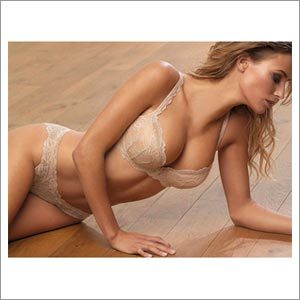
Womens Lingerie Lingerie Dress Addict For Honeymoon Bag World Cup Gown Chest Dresser Underwear Photos Images Pics

Womens Lingerie Lingerie Dress Addict For Honeymoon Bag World Cup Gown Chest Dresser Underwear Photos Images Pics

Womens Lingerie Lingerie Dress Addict For Honeymoon Bag World Cup Gown Chest Dresser Underwear Photos Images Pics

Womens Lingerie Lingerie Dress Addict For Honeymoon Bag World Cup Gown Chest Dresser Underwear Photos Images Pics

Womens Lingerie Lingerie Dress Addict For Honeymoon Bag World Cup Gown Chest Dresser Underwear Photos Images Pics

Womens Lingerie Lingerie Dress Addict For Honeymoon Bag World Cup Gown Chest Dresser Underwear Photos Images Pics

Womens Lingerie Lingerie Dress Addict For Honeymoon Bag World Cup Gown Chest Dresser Underwear Photos Images Pics

Womens Lingerie Lingerie Dress Addict For Honeymoon Bag World Cup Gown Chest Dresser Underwear Photos Images Pics

Womens Lingerie Lingerie Dress Addict For Honeymoon Bag World Cup Gown Chest Dresser Underwear Photos Images Pics

Womens Lingerie Lingerie Dress Addict For Honeymoon Bag World Cup Gown Chest Dresser Underwear Photos Images Pics

Womens Lingerie Lingerie Dress Addict For Honeymoon Bag World Cup Gown Chest Dresser Underwear Photos Images Pics


No comments:
Post a Comment